
NewsNEWS
Featured products
Contact Us
How can flying cars avoid air collisions?
2026-07-12Flying cars want to avoid the embarrassment of collision cars in the air, and the core does not rely on the driver’s vision, but on three sets of hardcore systems as a foundation. Firstly, there is the digital navigation channel, where each vehicle must fly according to the preset “air lane”, similar to high-speed rail crossing. If the route deviation exceeds 0.5 meters, an automatic alarm will be triggered. Next is the collaborative collision avoidance radar, which is not like a car reversing radar that only senses a few meters, but can scan all aircraft within a range of 300 meters in front, back, left, and right. Once the predicted distance is less than the safety threshold, the system will actively lower or yaw, and there is no need to manually turn the steering wheel throughout the entire process.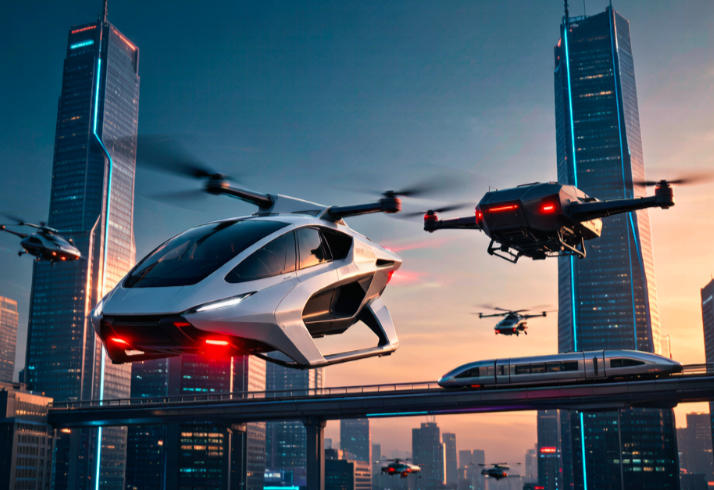
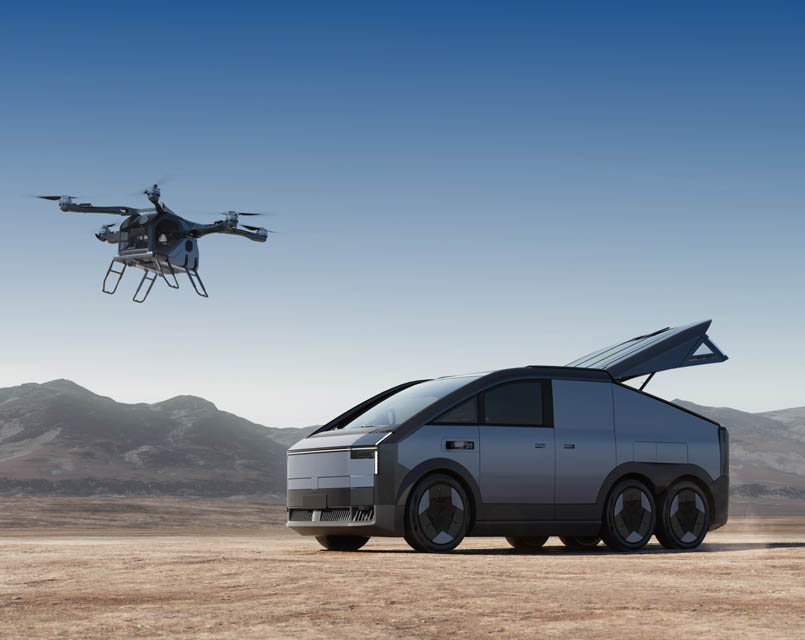
The image was generated by Ai
The most crucial thing is to unify cloud brain scheduling. All flying cars transmit coordinates to the ground control center every 0.1 seconds, and the center calculates the “exclusive time and space package” of each car in real time, which is equivalent to drawing an invisible bubble for each car. Before the bubbles overlap, they will be remotely forced to adjust speed. Of course, in extreme weather or when GPS fails, there is also visual inertial navigation as the last resort, relying on multiple cameras and gyroscopes on the body, which is at least 20 times faster than human judgment. In short, technological collision prevention is much more reliable than human response. What really needs to be prevented are hacker intrusion and sensor obstruction, which are the next major challenges.